

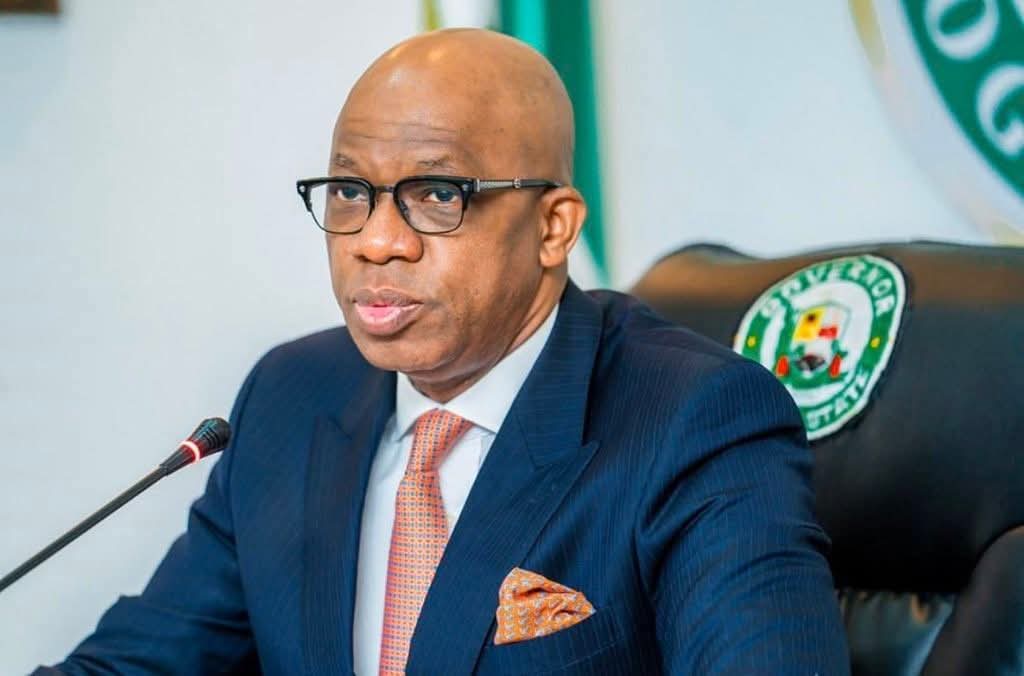
By: Dr. Olasile Adigun
Words can travel faster than truth. In this age of smartphones and algorithms, opinions often outrun facts, and narratives are shaped not by evidence but by emotion. From my base in Warri, I had been consuming a steady diet of social media commentaries about the Governor of Ogun State, Prince Dapo Abiodun, CON. The tone was harsh, the language acidic, the conclusions absolute. Videos circulated endlessly, blogs screamed failure, and rented outrage became a daily performance.
Yet something about it all felt hollow. Ogun State is my home state. I left over twelve years ago, but memory still serves as a compass. Out of pure curiosity—and a quiet determination to separate smoke from fire—I decided to travel. Not to argue online, not to counter posts with posts, but to see with my own eyes. As the saying goes, “A lie can travel halfway around the world while the truth is still putting on its shoes,” and I wanted the truth to at least step outside.
I arrived Ogun State through Ore and dropped at Mobalufon under the bridge in Ijebu Ode. Intentionally, I avoided my family house in Ibefun. I did not want familiarity to colour my judgment or affection to soften my conclusions. Instead, I checked into one of the five-star hotels in Ijebu Ode. I hired a driver, asked him to wait, and requested that he take me round the town and its environs. Without planning it, he became my guide—my first mirror to reality.
The journey to the hotel along Igbeba Road was my first jolt. The road was smooth, calm, almost poetic in its quiet confidence. Out of instinct, I asked the driver who did the road. He smiled briefly and said in Yoruba, “Governor wa ni.” That was all. Yet that simple sentence cracked the loud shell of online negativity I had carried with me.
Almost immediately, the driver began to talk—not like a politician, but like a witness. He spoke of roads, of relief, of movement made easier. My heart began to beat faster. It felt as though reality was gently tapping me on the shoulder, whispering that social media is often a marketplace of echoes. As Umberto Eco once warned, “Social media gives legions of idiots the right to speak when they once spoke only at a bar after a glass of wine,” and suddenly, that warning felt painfully relevant.
After checking in, I wasted no time. We moved through Igbeba Road to Luba Road, Awokoya, Iyidi, New Road, and down to Molipa Expressway. What I saw shocked me—not because perfection stared at me, but because progress did. Asphalt replaced dust. Order replaced chaos. Movement replaced stagnation. I began to feel uneasy, not with Ogun State, but with those who had painted it as a wasteland. I kept asking myself: Are these bloggers blind, or are they simply committed to darkness?
As we drove towards Imodi and Imosan, my worry deepened. Not worry about governance, but worry about how easily falsehood travels when truth refuses to shout. It reminded me of George Orwell’s insight that “In a time of deceit, telling the truth is a revolutionary act.” Governor Abiodun, it seemed, was not fighting propaganda with propaganda; he was responding with projects—quietly, stubbornly, deliberately.
We later moved towards Imoru Road, where I planned to see my friend, Foluke. By then, the driver was relaxed, almost amused by my reactions. We talked more. He spoke about the governor not with worship, but with respect—the kind earned when governance touches daily life. Roads that once swallowed vehicles now carried commerce. Areas once avoided after dusk now breathed with activity.
Day two stretched the metaphor further. We travelled to Sagamu, Ikenne, and Ilishan-Remo. It felt like stepping into a parallel Ogun State—one that had shed an old skin. This was not the Ogun I left twelve years ago. This was a state being reintroduced to itself. Infrastructure had become a language, and the government was speaking it fluently.
Across the Ogun East corridor—Ijebu and Remo axis—the signs were unmistakable. Roads linked communities like stitched fabric. Economic arteries pulsed steadily. New industries stood like punctuation marks in a long developmental sentence. Ogun State’s industrial soul was not only alive; it was evolving.
The Gateway International Airport project loomed large in conversations and in sight. Beyond the politics, it represented something deeper: intention. Vision. A refusal to govern small. While social media bloggers busied themselves renting outrage by the hour, the administration was laying runways for the future. It brought to mind the saying that “Empty vessels make the loudest noise,” a metaphor that perfectly fits many of today’s professional ranters who mistake decibels for depth.
Healthcare facilities showed signs of renewal. Schools looked less abandoned, more purposeful. These were not cosmetic changes; they were structural statements. Governance here was not chasing applause—it was chasing outcomes. And as I observed all this, another truth became unavoidable: many online critics are not watchdogs; they are undertakers of hope. As Václav Havel once noted, “The tragedy of modern man is not that he knows less and less about the meaning of his own life, but that it bothers him less and less,” and for some bloggers, distortion has become a full-time profession.
This journey turned into a public relations stunt without choreography—not one staged in press releases, but one written in concrete, tar, and steel. Governor Dapo Abiodun’s administration does not scream success; it allows evidence to speak. While bloggers trade in exaggeration and rented anger, governance here trades in continuity and quiet resolve.
Social media ranting has become a cottage industry—outrage as occupation, distortion as income. But governance is not a podcast; it is not sustained by likes or shares. It is sustained by roads that last, industries that employ, and infrastructure that outlives noise.
I returned from my two-day visit with clarity. Not because Ogun State is flawless, but because the gulf between reality and online narrative is too wide to ignore. This experience reaffirmed a simple truth: you cannot photoshop asphalt, you cannot filter industrial growth, and you cannot hashtag your way out of visible progress.
Governor Dapo Abiodun may not satisfy the appetite of professional critics, but he is clearly feeding the future of Ogun State. And in the end, history does not quote bloggers; it cites builders. My curiosity led me home, but what I found was not disappointment—it was revelation.









Leave a comment